Thursday, March 03, 2011

DVD Review: The Stitches Live at Der Weinerschnitzel 2003


DVD Review:
The Stitches
Live at Der Weinerschnitzel 2003
(Vinyl Dog)

Some information just endears the uninitiated to a band even if they know nothing about the group members or their music. Take, for example, the time I mentioned to a friend, “The Stitches, this punk band I like, once played a show in the parking lot of a Der Weinerschnitzel in Orange County. "Now they sound like my kinda guys," she responded, “I bet that was fun! I wish I'd been there."

The aforementioned concert, The Stitches : Live at Der Weinerschnitzel 2003, airborne chili dogs and all, is now available on DVD from the band's website.

The Stitches formed in 1994 in Orange County and  unique brand was one of the mainstays of the thriving skatepunk scene in 1990s Orange County. The band consists of singer Mike Lohrman, guitarist Johnny Witmer, bass player Pete Archer and drummer Craig “Skibs” Barker. The Stitches have been around since 1994, releasing several singles and EPs , two full-length albums (less is more!), and playing gigs for their loyal following around SoCal, along with occasional U.S. and European tours. The band’s live shows tend towards bona-fide punk rowdiness, with mosh pits, stage diving and the obligatory fight between audience members.

The DVD menu page is, appropriately enough, a Der Weinerschnitzel drive - through menu.  You can choose to view either concert only or the show footage with highlights of the crowd in the parking lot, which includes a kid with an elaborate green Mohawk and a Mom with little punk outfitted tots. The show footage begins with singer Mike Lohrman walks out with a Der Weinerschnitzel bag over his head. (Shades of the Unknown Comic?) After his intro, the bag disappears, and the band veers into a lighting-fast set. Then the chili dogs start flying - from the crowd onto the band and vice versa. It's not an ongoing barrage, but just enough for things to get a bit messy.  The show clocks in at 28 minutes and 43 seconds, including encores. But the Stitches put out more energy in that short set than some bands that play twice as long. The band segues through Cars of Today, Electroshock Carol, Pick Me Up and other songs from their second album, 12 Imaginary Inches and crowd favorites like My Baby Hates Me and a cover of That Woman’s Got Me Drinking, the Shane MacGowan and the Popes classic, from the manic debut 8 X 12. This is one of the Stitches best shows, and that's saying something cause they are all pretty damn good.

The "home-style" video footage really gives the viewer a sense of “being there.” Cameras need to go out of focus occasionally to get that feeling of being in the pit or at least near it. You need jittery close-ups of the cups on the ground and a close-up of the street sign hanging from the light pole. This slice-of-life approach really works for such a fun event.  

I also like how the camera from behind and focuses on the kids as much as the band. This typifies another interesting SoCal trait, where you find a lot of young kids with old-school punk Mohawks. Now you know their parents probably spent time at the Masque (or lesser known punk clubs) and helped give them fashion pointers.


Saturday, February 19, 2011

Dreams and Shadows: A Film Review and an Interview with Director Tamarat Makonnen


Dreams and Shadows is a promising directional debut from Tamarat Makonnen. The movie is half-psychological drama, half-suspense thriller. It tells the story of an alienated teenage boy, Billy (played by Shawn-Caulin-Young) who works at a fast-food joint to support his paraplegic veteran father John (played by James Russo). Billy’s life is absolutely joyless. He’s bullied by local kids on his way from work and comes home to deal with his alcoholic, moody Dad. He entertains action fantasies about Samurais while alone in his bedroom to relieve his boredom with everyday life.  He has a girlfriend, Sarah (Natalie Garcia Fryman), a foster child with problems of her own. She is his only real-life friend, and they both dream of a way out of their dreary existence.

Billy strives to find out more about his mother, who died when he was quite young and banters back and forth emotionally with his Dad. Russo turns in a strong performance as the troubled Dad who camouflages a shocking secret. His character is at turns caring, irresponsible, violent and deceitful. One of his scenes with a prostitute who’s put-off by a sudden display of tenderness is especially heartbreaking.

The highlights of the film take place during the first half, where we get a sense of the characters backstory and Billy’s desire to change his life. Although the set-up is somewhat slow, it piques the viewer’s curiosity. We want to know more about what’s happened to John and how his wife died.

We get answers to these questions when the film veers from psychological drama into suspense thriller in the second half. This change in cinematic mood jolts the viewer into what seems like an entirely different film. It’s not a bad "second half", per se, it just doesn’t mesh well with the first part of Dreams and Shadows. As Billy learns about his Dad’s secret life and sets out for revenge, the film resembles a TV detective drama with a lot of twists and turns and characters who ultimately turn out to be more Mr. Hyde than Dr. Jekyll.

Makonnen’s script shows a keen knowledge of dialogue and character development until the revenge scenarios kick in. Even the pulp novel/detective drama portion of the film is well-paced and well-acted, though incongruous with the first half of Dreams and Shadows. Makonnen’s feature film debut shows a lot of potential. He is obviously a serious student of cinema and it’s apparent in this uneven but emotionally riveting film.


Interview with Dreams and Shadows Writer/Producer/Director Tamarat Makonnen

 JB- What is your film background?

TM- Well after attending Virginia Union University I went back home to New York where I cut my teeth working on all kinds of film projects. Commercials, features, documentaries everything. Picking the brains of any and everyone on set that would lend me an ear. I was a human sponge. Eventually I saved enough to buy a 16mm camera and began shooting short films. This was in the 90s so digital wasn't an option (laughter). 

JB- I read in your bio that you directed music videos before making Dreams and Shadows. What videos did you direct?

TM- I've directed videos for dead prez "Mind Sex", Boogiemonsters "The Beginning of the End" and most recently L.E.G.S "Journeyman". I've also directed videos and EPKs for artists like Luke, Lil Kim, C-Bo, Stone Rivers and Neyo, plus a few others.

JB-How did this serve as a springboard to making a feature film?

When possible I enjoyed incorporating narratives into the music videos that I directed. In that way the music video essentially becomes a short film. Also at the time labels were putting a significant amount of money into music videos. So in some cases you would have the same amount of equipment and crew members working on your video set as you would if you were shooting a feature film. It was great practice for what was to come.

JB- What inspired the screenplay for Dreams and Shadows?

TM-After moving to Los Angeles I began to focus more on my writing and Dreams and Shadows was one of those projects that had been lingering in my head for a while. When I started to write the script I knew I wanted to create characters that would haunt you later. Russo's character being confined to a wheelchair while his addictions and dark secrets tortured him was an intriguing premise to me.

As for the Billy character he's an outcast. Everyone knows an outcast. Their usually misunderstood for being different. I knew that the combination of the destructive father figure and the fragile son who's standing at a proverbial cliff would create an interesting scenario. Ultimately I wanted to create a claustrophobic existence for the audience to peer into. Sort of like looking into a snow globe filled with dirt and grime. You want to see the characters break the glass.

JB-What was the hardest scene to shoot (either technically or emotionally)?

TM- Technically the dream sequences where pretty challenging because of the elements. We shot those on a private ranch in Agua Dulce near Santa Clarita, California. It was about 100 degrees and steadicam operator was carrying the camera rig on him in this blistering weather in the middle of the forest. There was a lot of stop and go shooting because we wanted to make sure he stayed hydrated. It was tough but it all worked out.

Emotionally the scene where Billy returns home from his twisted revenge mission and he's crying in his dad's arms was intense. The actor Shawn-Caulin Young really took his time getting prepared for the scene and when we began shooting he just exploded. It was one take. He was totally exhausted afterward.

JB- Can you tell me about the casting process? How did you find the film’s stars, James Russo and Shawn-Caulin Young?

When Shawn walked in I didn't think he was right for the role physically but after his audition I began to look at him from a different angle. He brought an awkwardness and vulnerability to the character that was necessary. He's a talented actor and I'm sure you'll be seeing more of him in the future.

Russo is a veteran, the guy has worked opposite Robert De Niro. I heard through our casting director Neely Gurman that he was interested in the project so we set up a meeting. We had lunch and talked about the script, the character and what I was looking for from the actor who would play the part. He's a very passionate person and so am I so it worked out well.

JB-Are you working on any new film projects?

TM- I have another feature that I'm developing as well as a documentary that I will be directing this year.


JB- What films and directors have influenced you and why?

TM- Wow, it's so vast. Everything from Federico Fellini's "La Dolce Vita" to Spike Lee's "Do The Right Thing" to the Shaw Brothers' films. I'm big fan of the fantasy/action genres of the late 70s and 80s, Star Wars, Raiders of the Lost Ark, ET, etc. ... I truly believe that Lucas and Spielberg sparked the imaginations of an entire generation with those films. In recent years foreign films like Fernando Meirelles' "City of God" and the Swedish vampire film "Let the Right One In" really inspired me as well.


Saturday, February 05, 2011

Book Review: Lick Me: How I Became Cherry Vanilla by Cherry Vanilla


Although not as well-known as her more mainstream contemporaries Pamela Des Barres and Cynthia Plaster Caster, Cherry Vanilla (born Kathleen Anne Dorritie) was arguably the most brazen and the most cerebral groupie of the swinging late ‘60s/’70s. Based on her chapter in Pamela Des Barres’ groupie round-up, Let’s Spend The Night Together, Chicago Review Press offered Cherry her own book contract and the result is Lick Me: How I Became Cherry Vanilla (by Way of the Copacabana, Madison Avenue, the Fillmore East, Andy Warhol, David Bowie and the Police) This raunchy and refreshingly honest memoir takes readers on a wild ride through two decades of hedonistic New York, from hippie happenings in Central Park to the punk clubs of Manhattan.

Groupie, though, was only part of Cherry’s job description. She worked for a Madison Avenue ad agency while barely out of high school, traveling the country on business trips as one of the first female radio/TV ad execs in the business. Folks in the real-life “Mad Men” days were every bit as horny and adventurous as rock stars, according to Cherry’s accounts of LSD use and “whipped cream parties” at Fire Island getaways.

It wasn’t long before Cherry took advantage of the burgeoning Lower Manhattan club scene, working as a DJ and mingling with models, actors, royalty and the Andy Warhol crowd. She starred in Warhol’s play Pork, appearing nude onstage in the British production. In between acting and DJing, she had flings with musicians Leon Russell, Kris Kristofferson, Burton Cummings of the Guess Who, and Shawn Phillips, who wrote two songs about her. Cherry’s most famous conquest, though, was David Bowie.

As his publicist and a major behind the scenes presence at MainMan Productions, the infamous glam-rock artist management company, she was instrumental in bringing Bowie and his music to the States. She was friends and business associates with him, first and foremost. However, when he finally suggested, “Come on, let’s go to bed,” Cherry followed through, despite having bandages on her thighs to cover carbuncles from bug bites. A potentially embarrassing situation became a fun, romantic romp.


Cherry in 2010

Cherry was Bowie’s PR person til MainMan was disbanded in 1974. Undaunted, Cherry entered the next phase of her career-as a solo artist for RCA records. She toured England with then unknown back-up musicians - Stewart Copeland and Sting - from a band called the Police. Her outrageous stage persona garnered her some scathing reviews in England, but her two albums, Bad Girl and Venus d’ Vinyl, have retained a cult following to this day. After she was dropped from RCA Records, Cherry hit hard times, and was even homeless for awhile. Now she lives in Hollywood and works for the composer Vangelis, still feisty as ever at 67.

Cherry Vanilla’s exploits are fun-and somewhat exhausting (in a good way) to read. Was there anything this woman didn’t do? Groupie, poet, publicist, journalist, fashion icon, Warhol protégé and actress, ad agency exec and sexual provocateur, it’s surprising that Cherry Vanilla’s story fits into a mere 288-page book! The memoir isn’t all fun and titillation, however, as Cherry frankly discusses her battles with OCD, near disasters with bad drugs and bad men (including one harrowing encounter with a creepy sadist), abortions and sexual addiction.

Lick Me is a rollicking visit back to the days when the whole creative “counterculture” seemed to coalesce into a few miles in Manhattan (and London). It’s a great memory-jogger for kids who came of age reading Creem and watching the 1980 Floor Show on the Midnight Special.

Cherry Vanilla Official Website

Read more: http://blogcritics.org/books/article/book-review-lick-me-how-i/#ixzz1D98ZX4YC

Wednesday, January 26, 2011

Music Review: Baby Scream: Self-Titled CD


The self-titled CD by Argentine rockers Baby Scream takes clean power pop and classic rock, then adapts a John Lennon vocal style and binds them together with top-notch production. This CD is Baby Scream’s ninth album since 2002. (The band has existed in one form or another since 2001.) Baby Scream is one band that will certainly never run short on inspiration.

Baby Scream is the brainchild of vocalist/guitarist/songwriter Juan Pablo Mazzola. His brand of Beatles met Cheap Trick pop traverses genres for a sound that defies typecasting. On Jekyll & Hyde, Mazzola channels Strawberry Fields Forever, with just the slightest hint of prog/space rock added in to complete the trippy vibe. The lilting The Ghosts of Valerie (with guest guitarist Eric Dover from Alice Cooper’s band) sounds like a 1980s “skinny tie” band hit filtered through a 1960s one-hit soft psychedelic sound – think of the Peppermint Rainbow’s Are You Staying After Sunday?

Nipone, the lullaby that ends the album, has a Japanese-influenced sound that becomes as haunting as it is gorgeous as the song progresses.  Exile has a Revolver feel with especially dreamy vocals.  

Watching the End of the World (On TV) shares a kinship with Bowie's Five Years ,but after a mellow start, the song revs up to high gear, chugging along like a finely-tuned machine. Along with vocalist/guitarist Mazzola, the band consists of lead guitarist Hernán Pascual, bass player Raul Marcos, and drummer Claudio Salas. 

Baby Scream has a trippy psychedelic vibe -- call it acoustic psych/power pop, if you really need to label it. The acoustic guitar sound on this CD has a ballsy passion you won’t find in any music with the partial description “folk” The ten songs on Baby Scream have a timeless sound that could fit in with rock music playlists from the ‘60s, ‘70s or early ‘80s.


Monday, January 24, 2011

CD Review: Sci-Fi Romance: ...and surrender my body to the flames


Los Angeles based singer-songwriter Vance Kotrla is a man of many talents. He once played drums for death metal band Black Spiral and formed his own production company, Broken Image Entertainment, shortly after graduating from high school. Now he has turned his attention to music, releasing a solo CD, ..and surrender my body to the flames, under the moniker Sci-fi Romance. The name was inspired by a review of Eternal Sunshine of the Spotless Mind, which described the film as a “sci-fi romance.”

…and surrender my body to the flames has already placed on a Best of 2010 list from a Dutch music blog. Even a cursory listen to the eleven tracks on the CD (also available via digital download on Bandcamp), will help you understand why this debut effort received such an accolade. The songs explore themes of love and loss with a sound that can best be described as “alt-folk.” The lyrics, which appear on the Windows Media Player screen as you listen to each track, have a melancholy literary bent to them. It’s somber Nick Cave meets Joseph Heller with a screening of Metropolis in the background. Fittingly, Kotrla has complied public domain footage from science-fiction films to accompany the songs on …and surrender my body. You can watch the videos on his YouTube channel or the Sci-fi Romance website.

Frankenstein’s Lament, with its haunting female background vocals and sparse acoustic guitar, is told from Dr. Frankenstein’s point of view as the angry villagers rebel against his creation. These Scars, combines a love song about emotional pain and a sci-fi tale of impending death. Kotrla channels a bit of Type O-Negative here, that is, if Type-O had a more intellectual approach to their lyrics. The wistful Long Gone looks back at youthful mistakes, while In the Dark Together conjures up visions of two young lovers on the road in a desert town, vowing to stick together no matter what fate bestows upon them.

…and surrender my body to the flames is an unusual combination of poetic lyrics and old-school science fiction imagery. Vance Kotrla’s main strength here lies in his words, and the mostly acoustic music serves as a conveyance to reveal the emotions and storyline.

Sci-Fi Romance Facebook Page

Sunday, January 16, 2011

CD Review:EZ Tiger


EZ Tiger, a three-piece alt rock band from L.A.,. features singer/guitarist Tina DiGeorge, bass player Anna Rosales and drummer Kristy McGinnis. On their self-titled debut CD, this trio creates a sound that’s more pop/rock than indie hipster. Some of the songs,  like the haunting Any Other Day and Stay, a lovely pop ballad that would definitely earn the term “radio-friendly” in the days when radio actually played good music,. remind me of hit tunes from  many late  90s pop/rock bands Groups like Everclear, Dishwalla and  Del Amitri produced  catchy songs that were just “right” – they weren’t entirely light rock, but not really alternative either. EZ Tiger’s music has this same template. Their songs have clear melodies, concise lyrics that can appeal to a wide range of listeners without seeming too diluted, and strong, appealing vocals That’s not hard to fathom when you find our EZ Tiger was produced by Brian Wilson’s keyboardist Scott Bennett..  The songs ring through flawlessly, with an even-handed mix that doesn’t favor any aspect of the material over another.

Don’t let the Dishwalla reference make you think EZ Tiger doesn’t offer some outright, in-your-face rock. The best song on the CD, Dancing for Dimes, has a menacing punk rhythm and a tasty guitar outro by DiGeorge.  It demonstrates that EZ Tiger can turn up the heat and channel the Buzzcocks as convincingly as they can perform sweeter, more introspective  material. Last One In has a wonderful, danceable energy to it with a bit of a ‘60s Mod vibe.

EZ Tiger is a pleasant surprise. Their songs aren’t tied to any one genre or fad – they stand on their own. The band plays at the Redwood Bar in downtown L.A. on February 13th..

Thursday, January 13, 2011

Music Review: Sorrows - Bad Times Good Times


After the demise of the Beatles-influenced Poppees in 1976, the band’s guitar player Arthur Alexander and drummer Jett Harris formed a new band, Sorrows (just “Sorrows, no “the”) , which ratcheted the Poppees sound up to 11 by adding a power pop feel and a tougher guitar riffs. The new band featured Alexander on vocals and guitar, Harris on drums, Joey Cola on guitar and vocals, and Ricky Street on bass and vocals. They were signed to CBS/Pavilion Records in 1979, near the height of power pop mania.

Sorrows music is fun guitar pop with an edge, totally in kinship with other power pop bands  like The Beat and 20/20, but they have more of a rock edge ala the Flamin Groovies. As far as music biz lore goes, Sorrows have a lot more in common with early power pop brethren Blue Ash. Both bands were undervalued by their record company and dropped from the label after their second album.

Luckily, in 2010, artists don’t need to depend on nearsighted record executives to market their music to the masses. Keep in mind, Bad Times Good Times consists of previously unreleased songs, not a repackaging of their CBS albums. When the band broke up, vinyl copies of Teenage Heartbreak and Love Too Late became collectors’ items, as CBS never released the albums as CDs. This turned out to be a blessing in disguise. Armed with original demos and some unreleased tracks (some of them saved from a dumpster outside NYC’s MediaSound Studios). Alexander went into a L.A. studio and reworked the songs. Bad Times Good Times (Bomp Records), a collection of 14 studio songs and two live tunes, was the result.

The title track kicks off the album with a raucous guitar, followed by the foot-tappin, power pop melody of Can’t You Tell a Lie. The song has a layer of hard-edged, twangy guitar underneath. This effortless combination of power pop, pure rock ‘n’ roll guitar and punk attitude fused together gives Sorrows music a raunchy edge many skinny tie bands lacked, and it’s evident throughout the CD. Can’t Go Back shakes and bakes crystal-clear harmonies with jangly guitar and infectious melody. The frenetic rockabilly of That’s Your Problem quickens the pace. She Comes and Goes , the lone “slow” ballad (well except for a soaring, arena rock worthy bridge) is, about a melancholy lost girl who lives to go to rock shows A cello interlude by Jisoo Ok adds a lovely touch to the proceedings.

In the liner notes Barry Dreyfus describes one of the band’s sets at CBGB’s as a “total sonic assault.” The two live songs on Bad Times, Good Times verify that. A cover of the Stones "Off The Hook" adapts a rockabilly twang at the start and veers into straight-out rock. Carole King’s "Chains" becomes a ballsy, cathartic rocker.

Alexander has said that Sorrows’ music is like “Abba meets the Sex Pistols”. That concept may first strike you as an oxymoron, but when you hear Bad Times Good Times, you’ll realize it’s absolutely plausible, and it makes for some boisterous - and timeless - power pop songs.


Saturday, January 08, 2011

Keith’s “Life”, My Stones “Brush with Greatness” and Fangirl Memories


To comedians, Keith Richards has become an endearing punchline. (I’m partial to the Jay Leno line “Why can’t we make planes the way we make Keith?"). And it’s not hard to understand why. Between Keith’s gnarled old pirate looks,  the cigarette perpetually dangling from his mouth as he plays guitar, and the all the  legendary songs he’s written or co-written - songs  that have become intertwined in the fabric of everyday life - it’s a little hard to fully envision the man behind the myth. Sometimes it’s difficult to see where the caricature ends and the real person begins. But despite this larger than life persona, Keith’s survived to tell the tale when many of his contemporaries haven’t. We all know the basic storyline, but now Keith himself fills us in on the truth behind five decades of debauchery and rock ‘n’ roll.    

Keith’s autobiography “Life” is, above all else, funny, insightful and poignant. Even though the most widely reported sections of the book have to do with “Mick’s tiny “todger” and the infighting between Keith and Mick, (known less affectionately as “Brenda” for his sometime diva-ish behavior.), the best part of the book is…everything!  Life is 547 pages long, and you don’t want to miss anything, not even the less sensational, non-sex and drugs portions. If you’re one of the few people who haven’t read Life yet, I don’t want to spoil it for you by revealing too much. Keith’s candid witticisms and casual but poignant observations about people and events are a pleasant surprise, and there’s a great one every few pages that will make you smile. About Mick’s fling with Anita, Keith writes. “Anita was a piece of work. She probably broke his back.” He writes of being left behind by a limo in the mid-'60s, surrounded by rabid teen-age girls, as the rest of the band sped away. Of the teen hysteria that besieged bands at that time, he notes, “The power of teenage females of thirteen, fourteen, fifteen when they’re in a gang has never left me. They nearly killed me…You’d rather be in a trench fighting the enemy than to be faced with this unstoppable killer wave of lust and desire or whatever it is - it’s unknown even to them.”

Keith writes of reuniting with his Dad Bert, who lived in the back of a pub for years after divorcing his Mum. Upon their meet-up in 1982, Dad’s comment about Keith’s outrageous rock star behavior was” You’ve been a bit of a bugger, haven’t you?” And Keith didn’t really snort Dad’s ashes…well, not on purpose, anyhow.  We learn that Keef and Anita’s seven year old son Marlon served as his Dad’s caretaker on the 1976 European tour, waking him up in time for shows and keeping him out of trouble. We learn that Keith met Patti Hansen, the love of his life, at Studio 54 while trying to escape Britt Ekland, who was stalking him at the time.

Even if you’re not a Stones fan, you’ll end up liking and respecting Keith after reading Life.  And if you’re a Stones fan, you’ll find out he’s even cooler than you originally thought.

The book brought back so many memories of my teenage fascination with the Stones. Life opens with Keith’s 1975 bust in Arkansas - over a hunting knife, they said. The ‘75 tour was the height of my fandom. I clearly remember all the news stories about that bust and the comedy of errors that ensued afterward. I discovered the Stones when I was 11, through Sticky Fingers and Brown Sugar. I remember walking into the local Turn-Style store (the early ‘70s version of Target) to buy a copy of the single. Turn-Style sold singles shrink-wrapped onto a piece of cardboard. The song names were stamped on  the cardboard in big block letters, along with the title of the flipside in smaller letters. The flipside of Brown Sugar was Bitch. Ooops! A naughty word. I couldn’t let my Dad see that – he might nix my purchase, and I had to have that record.

I told my Dad I’d pay for the record myself.  I headed to the cashier, in my purple crushed velvet coat and the white tam 'o shatter my Grandma knitted for me.  My Dad made small talk with the cashier as I paid for the record. Neither of them noticed the offending title. I was home free! And you can imagine what occurred when I first saw the album live and in person in the LP bin. Well, the record store manager had to replace some shrink wrap that night.

My Stones “Brush With Greatness”

Fast-forward to senior year of high school. There was a picture of Keith in Hit Parader wearing a pink shirt with a wind machine blowing his hair, the whole deal. Yes, Keith was Hit Parader’s rock star pin-up of the month.. This was 1978, the last year any stylist could get away with trying to make him look even remotely sexy.

And his famous skull ring was prominently displayed. I wanted one! I discovered Aleister Crowley because of Jimmy Page and Ayn Rand because of the Rush album 2112, and biker skull rings because of Keith.   

Now in 1978, there were no Internet biker ring warehouses, no Target or Hot Topic to supply skull and crossbones rings for suburban teenage girls. I took the bus to the local bikers’ store when the rock ‘n’ roll head shops I visited were bereft of skull rings.

They didn’t have ladies sizes and I have tiny fingers. The grizzled old South Side bikers found this quite amusing. “I don’t think they make this ring in petite sizes,” one of them laughed. “”Maybe you could put it on a chain and wear it as a necklace.”

The Stones played Chicago's Soldier Field in the summer of 1978. Since it was general admission, I could weasel my way to the front of the stage. I cut class to buy my ticket the day they went on sale, and was one of the first people on the field before the concert started. However, as anyone who has spent more than a few minutes standing in the middle of crowded outdoor venue can tell you, it ain’t a pleasant experience. Between the heat and the boredom, I couldn’t take it, and elbowed my way off the field and into the stands, looking for a spare seat. Unfortunately, the show was sold out – down to the nosebleed seats.

 One of my fave posters from junior high.

I happened upon one of my friends, a co-worker from Montgomery Wards, sitting in a cordoned off section way up high in the stands, which had been reserved for radio station contest winners. She snobbily rebuffed me. I traipsed around the stadium while the opening bands played, encountering  drunken, grabby guys, enterprising small-time drug dealers and one helpful soft-drink vendor who tried to help me figure out Soldier Field schematics so I could get backstage. None of it worked.  Finally, I went back to join the dopes standing by the front of the stage. I jumped off one of the barricades between the seats and the field. The drop was several feet, but I was a springy 18 year old, so I could handle it. It was a long drop but I made it so I was back full circle, standing at the front of the stage. I staked my spot about three rows back.  I could see everyone in the band but Charlie.

Spurred on by the exhilaration of getting so close to the boys, and by the pot and beer I’d accepted from iterant bystanders on my trek around the stadium, I waved to Keith. A sweet, totally fangirl move. Keith looked right at me and smiled, then turned to Ronnie and whispered in his ear. Then, they both looked straight at me and smiled.

I was so happy I almost burst. They returned to their playing and I turned my attention back to Mick. Imagine, Mick prancing around doing his thing two inches away from you. It was awesome yet kind of freaky at the same time.

So that was my Stones “Brush with Greatness” My original coverage of the concert, typed on an electric Smith-Corona I nicknamed “Pervert”, is long gone. I remember it being funny as hell and it got me a gig with my college newspaper, the Columbia Chronicle, aka the Chronic, as my friends and I christened it.

That was the last time I saw the Stones in concert. The next time they toured, in 1981, I was in college, living in Lakeview, and going to punk shows at Tuts. No more big stadium shows for me. I was all growed up. I had moved on, musically speaking, but I always return to the Stones every now and then. Everybody has a band that brings back happy memories of their formative years, and for me, the Stones were that band.


Saturday, December 04, 2010

Married to Rock: Rock 'n' Roll Wives Star in New Reality Series


Well, I knew it was bound to happen one day. After years of ignoring reality TV shows (or watching small clips for writing assignments), I have joined the ranks of otherwise intelligent women who turn into cackling hens when discussing the exploits of botoxed reality show housewives.

It all started when my BFF told me I should make an exception to my reality show ban and watch something called  Married to Rock. “You’ll like it,” she said, “it’s about rock stars and their wives.” She then proceeded to tell me she liked the most outrageous, big-boobed wife on the show. “The other wives make fun of her, but she’s got a cute personality,” my friend said.  “Uh-huh,” I responded, visualizing the wife of some third-tier metal guy or a bimbo married to a guy from a bland and allegedly popular group like Nickelback or The Fray. “So who are the rock stars?” I asked, disinterested.  She then managed to remember one of the names – Steve Stevens. “He is Billy Idol’s guitarist,” I said, dumbfounded. Upon further interrogation, I discovered that the rest of the cast consisted of  Duff McKagan (Guns ‘N’ Roses, Velvet Revolver) and his wife Susan, an ex-model and swimwear designer, Perry Farrell (Jane’s Addiction) and his wife Etty, one of  the band’s former backup dancers,  Steve Stevens and his wife Josie (the aforementioned big-boobed wife with a cute personality) and most perplexing to me, Billy Duffy of the Cult and his girlfriend, a VIP hostess named AJ Celi. (I’m a big Cult fan, and I always got the impression Billy was a guy who wanted to keep his offstage life private). None of these couples seemed to fulfill the normal “brain-dead and obnoxious” template for reality show couples. My curiosity piqued, I checked out some highlights.

-Josie has a “love doll” made of herself and sends it to Steve on tour.
-  AJ attempts to cook dinner for Billy (with her Dad’s assistance) and fails miserably.
-  Etty auditions dancers to find her replacement for the Jane’s Addiction tour.
-   The girls take Susan to Trashy Lingerie to get her to dress sluttier.

Not exactly the A-1 primo catfights we’ve come to expect from reality TV housewives. I actually found all the couples to be likable, which doesn’t normally guarantee ratings gold for reality shows. Since the show debuted on E! in early November, the full verdict isn’t in on ratings and viewer commentary yet. However, I rather like the fact that a group of reality show women are portrayed as friends more than “frenemies” to be refreshing.

Sunday, November 28, 2010

CD Review: The Like: Release Me


I first saw  L.A. girlgroup The Like perform at a Christmas shindig thrown by Indie 1031 in 2005 . At that time, their songs were well-constructed and had catchy melodies, but there wasn’t much else to distinguish them from the crop of  indie-pop bands battling for airplay in the mid-2000s.

The Like‘s first CD  Are You Thinking What I’m Thinking? gained some airplay on Indie1031 and other alt-rock outlets. The female trio consisted of singer Z Berg , drummer Tennessee Thomas  and original bass player Charlotte Froom. Rock critics made a point of noting that the young women, barely out of their teens,, were the daughters of music industry bigwigs. Their paternal connections may have helped the band get their bearings, but their songs proved they had the raw talent to make it on their own.

Five years have passed and the band has reinvented itself. Bassist Charlotte Froom left, and was replaced by Laena Geronimo. They bulked up their sound by adding organ player Annie Monroe. The line-up changes aren’t the only difference. On the Like’s second album, Release Me,  the band has turned things up to 11 and redefined their mission by implementing a retro 60s pop sound. It comes complete with pitch-perfect Ronettes’ harmonies, Vox organ flourishes, and feisty lyrics about cheating boyfriends and one-night stands. 

Producer Mark Ronson, who guided Amy Winehouse to success on Back to Black, helped transform The Like from a so-so alt-pop band to a gutsy garage-rock outfit. Think of an updated, all-female version of the Easybeats or the Zombies. The lyrics on Release Me, much like the lyrics on Winehouse’s  Back in Black show a maturity unusual for the frothy four minute mod pop. From “Narcissus in a Red Dress" - “One minute, she's your best friend/Then you watch her take your place/I guess that taught them all the same/You clever little charlatans/Ambition gleams in overdrive”  

Songs run the gamut from the gauzy arrangement of “Narcissus in a Red Dress” to the roaring, Donnas-influenced rock of “Wishing He Was Dead.” “Why When Love is Gone” sounds like a soulful Dusty Springfield number, with a sturdy but subtle rhythm section guilelessly carrying the song.

 Release Me packs a retro 60s Mod punch, but the band also delivers live. Clips of their show from the Institute of Contemporary Arts in London demonstrate a newfound onstage confidence. Z Berg now has her own take on the sassy rock ‘n’ roll girl who don’t take no b.s. With her short blonde bob, eyeliner and heavy fake eyelashes she mimics “60s model Twiggy, but her vocals are part Shangri-La attitude, part smooth Bangles-era Susanna Hoffs.

Drummer Tennessee Thomas provides the vigorous backbeat, and has a blast doing it..the girls have matured and added the right touches to their initial indie-pop formula, spicing it up with Vox organ, girl-group harmonies and grown-up storylines. And they’ve traded Are You Thinking’s  PG-rated version of kinderwhore waif dresses to geometric print mini-dresses completing the transition from alt-pop princesses to retro-60s rock divas. 

Wednesday, November 17, 2010

Music Review: Cowboy Junkies - Renmin Park: (The Nomad Series: Volume 1)


Renmin Park, the first of four concept albums in the Cowboy Junkies “Nomad” series, is based on songwriter/guitarist Michael Timmins’ visit to China. He and his family adopted two Chinese children, and spent time taking in the culture and music of the country. The title refers to a public park in Zhengzhou, a city in the Henan province.

The Cowboy Junkie’s signature bluesy alt-folk sound blends with lyrics about everyday life and history of China. The album’s intro veers from sounds of a parade into the acoustic title track. Michael's sister, Margo Timmins, lends pensive vocals to bring the lyrics, a description of daily activities in “Renmin Park” to life. There are unusual sound bits through the entire CD. The improbably titled “Sir Francis Bacon at the Net” has snippets of a badminton game underscoring Michael Timmins' psychedelic-flavored but-folky vocals. “A Few Bags of Grain” is a world-weary tale of man recently released from a labor camp and his introduction to “A world gone insane.”

Hazy, sparse keyboards and a judiciously-used string quartet, add the finishing touch to this ambient slice of alt-rock meets Chinese culture. Renmin Park is nice to listen to in small increments, but it’s got that bluesy introspection and the backdrop of Chinese oppression and change don’t make for a toe-tapping time. The downbeat mood does change with “Stranger Here”. It has a hummable melody that would fit right in beside any mainstream rock tune. The lyrics describe a man’s spiritual struggle, “And I could tell you about the evening/that I was out drinking/and fell asleep by the well/I am the righteous man/the one you’re looking for/I am a stranger here”

Renmin Park features a reworking of two Chinese pop song. Composer Xu Wei’s tale of long-distance heartbreak. The lilting "My Fall” translates well into the Junkies’misty, melancholy style. Zuoxiao Zuzhou ‘s “I Cannot Sit Sadly By Your Side” combines haunting piano work throughout, a hint of native Chinese instrumentation, and a crescendo of electric guitar near the end to portray a tale of intrigue and murder. “Little Dark Heart “is a lullaby to loneliness, beginning with the lyrics “It’s a funny start / but I have no home / I have no name / I have no one / Except this little dark heart.” In the hands of a less accomplished band, it would be sorrowful overkill, but the Timmons siblings make it work. The confident strut of “(You’ve Got to Get) a Good Heart” provides a respite from Renmin Park’s mostly pensive tunes for 4 minutes and 27 seconds.

A musical journey to China that meshes well with the Cowboy Junkie’s normal modus operandi, Renmin Park is one of the band’s most ambitious projects to date.

Read more: http://blogcritics.org/music/article/music-review-cowboy-junkies-renmin-park/page-2/#ixzz15ZoPRiJT

Sunday, November 14, 2010

Bad Music Programming Killed the Radio Star – But the Internet (and Jonesy’s Jukebox) Pick Up the Slack


Terrestrial radio is now pretty much relegated to teenie-bopper nonsense, bad hip-hop, and talk shows dedicated to  political bickering. So where can a bona fide rock music connoisseur go to escape the overexposed and lowest common denominator sounds of Kanye West, Katy Perry, and Lady Gaga? Why, to the Internet – and to KROQ-FM  - at least on Sunday nights for the reconstituted Jonesy’s Jukebox.

Jonesy is back on KROQ and it's kinda ironic since his former station, Indie 1031, was supposed to knock KROQ out on its butt five years ago. Indie's ascent didn't last, however, and the company's owner, Entravision, pulled the plug on the punk/alt rock format in 2009.   The terrestrial station continues on FM in a Spanish-language format, while the punk/hip alt rock music still flows freely on the Internet. 

Jonesy’s new  Jukebox is on KROQ on Sunday nights 7 p. m. to 9 p.m. Pacific Time. His old partner-in-crime, Mr. Shovel, joins him as producer. The playlist so far lacks the quirky novelty songs and obscure 1970s glam rock of  the old Indie shows. It concentrates on electronica and post-2000 indie rock, like Julian Casablancas, Daft Punk, the Duke Spirit and Black Keys. But there’s the occasional local L.A. band find (Fitz & the Tantrums), and songs by Jonesy favorites like Eno and Primal Scream.

Another respite from the mostly non-existent rock radio landscape can be found on Internet radio oasis ErrorFM. You can find any kind of music here (just like Sirius/XM Satellite Radio), but you don’t have to shell out money to listen. DJs include ex KMET and KLOS staff announcer Larry Woodside, Alan Lohr (BuddhaMan, as mentioned in the previous post on Dolly Rocker Movement) formerly of KROQ. The specialty shows on ErrorFM run the gamut from Pod Zepplin and Floydian Slip to Electrique (electonica) and Donthink ( trip-hop). Every type of music you can think of (and some you haven’t) are offered by freelance DJs from all over the world.

One of the most popular shows on ErrorFM is Cyril’s Hollywood Jukebox, hosted by Cyril A. Ruth, one of the founding members of New Orleans punk band the Normals.  The two-hour show is streamed live on ErrorFM’s Channel 2 on Thursday nights from 8 p.m. to 10 p.m. A recent show featured New York glam, garage, punk and psychedelic bands of the past and present, including the New York Dolls, Fleshtones and new bands London Egg, The Choke and The Above. One of the highlights of the show is a weekly mini-concert featuring a 15-20 minute segment of a live concert. The New York show featured The Chesterfield Kings.  


Thursday, November 11, 2010

Dolly Rocker Movement : Trippy Psych-Pop with Panache


Originally from Sydney, Australia, the home of many kickin’ garage rock and psychedelic rock bands, the Dolly Rocker Movement imported its layered  psychedelia to America via a recent stint in Hollywood. (The band played the International Pop Overthrow in L.A.in August). Lead singer/songwriter Daniel Darling formed the band in 2002. Since then, they’ve released three full-length albums and 2 EPs, (with more on the way). Darling recently appeared on the Internet radio station ErrorFM, playing live tunes on the“Buddhaman  International Experience” show., including the new tunes I Drive a Mustang and A Corner Conversation.

The Dolly Rocker Movement builds on retro psych pop with harpsichords, trippy, feather-light, female vocals, synthesizers, folk-oriented acoustic guitars and twangy surfer-rock riffs. DRM’s well-constructed songs experiment with different tempos & vocal presentations, veering from Velvet Underground and Pink Floyd  orchestrations to straightforward fuzzy-guitar rockers.  I’ll be reviewing their CDs in a future post.

You can read an interview with Daniel on Ripple Music. 

Wednesday, November 10, 2010

The Crazy Squeeze - Glam & Punk Rock from the Heart of Hollywood


The members of Hollywood glam-punk band The Crazy Squeeze logged time with Teenage Frames (Frankie Delmane, guitar/vocals/keyboards), the Stitches (Johnny Witmer, guitar/vocals), Superbees, ( Johnny Sleeper, drums/vocals) and Richmond Sluts (Chris Beltran, bass). Judging by that resumé, you know the band has the chops to deliver some badass rock.  From the crunchy chords that begin All Lies to the catchy power-pop melody of With A Girl Like That, every song is an upbeat slice of sleazy, '70s glam rock influences and gritty punk. A fun live band that will keep you moving on the club floor, Crazy Squeeze’s sound is part Slade, part Dolls and all attitude. The band’s currently in the studio recording their debut CD.

The Crazy Squeeze plays The Redwood Bar in downtown L.A. on November 20th with The Red Roses and The Commotion.


http://www.facebook.com/thecrazysqueeze
 

Single available from Rapid Pulse Records

Tuesday, November 09, 2010

Fave Local L.A. Bands - The Ruby Friedman Orchestra


When you take a skilled female vocalist and back her up with talented rock musicians, that combo can get lost in crowd if it’s not peppered with that “something extra.” After all, how many hotel lounge bands and “American Idol” contestants have trained voices, good back-up musicians, and no pizzazz?

The L.A. based Ruby Friedman Orchestra takes the above-mentioned formula and shakes ‘n’ bakes it into a bluesy rock spectacle. There are a few things that differentiate redheaded sparkler Ruby from the current crop of “technically adept” female vocalists. Ruby has a sharp sense of humor and quirky intelligence that comes through in her songwriting and live performances.  (Some of her songs concern subjects as diverse as transcendental meditation and suicide.) Ruby draws from a variety of musical influences. Bessie Smith is one of her vocal idols. And one of  RFO’s show-stoppers in concert is a soulful cover of the Beatles  “I Want You (She’s So Heavy).”

RFO plays L.A. haunts like the Hotel Café, the Mint , and the Echo, where Ruby’s voice alone seems too big for the venue. Bigger things are on the horizon, though.  The band’s song “Shooting Stars” was prominently featured on this year’s promos for the TV show “America’s Got Talent.” A fave of legendary DJ  Rodney Bingenheimer, RFO’s song “Burning Skies” has also rated highly with listeners of KROQ’s “Locals Only” show.  The band’s currently recording a full-length CD.


The Ruby Friedman Orchestra plays Friday, November 12, 2010 at the Sunset Room (behind Amoeba Records) in Hollywood.


CD Review: Reunited by The Jazz Passengers


The Jazz Passengers first came to prominence in the mid-1990s when they released In Love and Individually Twisted with Debbie Harry contributing vocals on certain cuts.  But they’re more than a backing band for a punk chanteuse. The band formed in New York City in 1987 with a mission to make jazz fun without compromising form or musicianship. Debbie’s guesting with the band again on Reunited, their first album since 1997’s Live in Spain.

The CD opens with Elvis Costello singing an original composition by the Passengers’ Roy Nathanson called “Wind Walked By.” It  begins with a conventional jazz vocal, then unfastens into a lazy, discordant vibe that frazzles the listener with a cacophony of horns only a freeform lover can truly appreciate. The lyrics reference “Brother, Can You Spare a Dime?” and echo current economic woes with lines like “Time’s is hard now/I lost my home.” The back and forth bohemian approach is the Jazz Passengers trademark. If their goal is to make jazz music interesting and unpredictable, they’ve achieved it. Really, most modern vocal jazz music is nothing more than a skilled vocalist singing torch songs with piano and an occasional horn section.

The cover of Peaches and Herb’s disco hit “Reunited” is barely recognizable until the chorus, between the plucky strings and hush-hush vocals. (And was that a dj scratching a vinyl record in there somewhere?) with discordant horns thrown here and there for good measure. This is the antithesis of the smooth disco original. Vocalist/ sax player Roy Nathanson and Passengers’ trombonist Curtis Fowlkes trade wry, half-sung, half-spoken vocals. It’s the musical equivalent of a Cubist painting, taking elements and rearranging them in unusual and sometimes grating juxtapositions.

Debbie Harry’s contributions close out the CD. She lends a smooth and straightforward vocal interpretation to “Think of Me”, the most mainstream cut on Reunited. Her second song  is a hit-or-miss reworking of “One Way or Another” that starts out strong, but gets too “busy” near the end.

The bulk of this CD can be truly enjoyed only by avant-garde jazz aficionados. Reunited has a modern Beatnik vibe, like an Uptown ode to Dave Brubeck and Ella Fitzgerald. You can almost hear Jack Kerouac reading from “On the Road” over some of the instrumental interludes. Those unaccustomed to Bohemian jazz may find it amusing here and there, but it’s too “all over the place” for casual listeners- unless you live in a West Village apartment with bongos and a fireplace.

Read more: http://blogcritics.org/music/article/music-review-the-jazz-passengers-reunited1/#ixzz14lxmd7nL

Monday, November 08, 2010

DVD Review: Anything Boys Can Do: A Music Documentary by Ethan Minsker


Anything Boys Can Do, is a gritty portrait of female punk and alternative musicians in 1990s New York City. Released in 1996 by filmmaker Ethan Minkser of the Antagonist Arts Movement, the young women in this film infiltrate the Lower East Side and other artsy haunts of Manhattan with performances that are way beyond underground. Even the band names (except for the Voluptuous Horror of Karen Black)  might be unknown to anyone but New York scenesters of the time. The NYC alternative punk girls of the ‘90s were known for extremes in message and looks. They weren’t family or celebrity friendly like today’s “punks.” 

The girls from “Thrust” perform what looks like a “secret” show in a parking lot, playing thrashy music and simulating sex acts while partially clothed. Tribe 8 plays rough pro-lesbian, pro-feminist grunge, Sexpod, perhaps the most musically adept band in the documentary, has a lazy, bluesy tinge to their songs. Kembra  Pfahler of the Voluptuous Horror of Karen Black performs topless in her signature horror movie make-up and body paint, growling/screeching/singing and engaging in all types of antics. She does a headstand while a member of her troupe cracks an egg over her vulva. By the time this happens, we’re so immune to the noise and nudity it’s neither shocking nor titillating. It’s just part of the show. Actually, I think I’d be shocked if I ever saw Kembra onstage with her breasts fully covered. This 71-minute film delves deeply into the aspects of the bands' struggles with making it in the male-dominated music world  as well as some of their personal struggles. This isn’t documentary “lite” – it really gets under its subjects’ skin.

Sunday, September 19, 2010

CD Review - King of Power Pop by Paul Collins

King of Power Pop
Paul Collins
Alive/Natural Sound Records


Paul Collins revisits the fun and frisky sounds of the Nerves and the Beat with a CD of (mostly) new material  on King of Power Pop. You can’t find fault with the title after listening to songs that alternatively bring to mind The Beatles, The Beach Boys and the best tunes from Collins’ groundbreaking power pop bands.

The CD starts off, appropriately, with C’mon Let’s Go, a raspy garage rock anthem with a. modicum of Brit invasion phrasing. Nikki Corvette adds sass with her backing vocals.

The Ramones-y intro  to Doin’ It for the Ladies pulls you into the song immediately. It’s purely reminiscent of the Beat, and the .bon vivant man about town storyline has a clever twist. Hurting’s On My Side, a reflective ballad with harmonies that echoes the first few Beatles albums, has a slight country twang to the guitar.

Collins’ crisp guitar drives the fast-paced songs. The Romantics’ Wally Palmar on harmonica, Collins’ longtime lead guitar player Eric Blakely and drummer Dave Shettler (from Detroit garage rock band the Sights) round out the sound.

Many Roads to Follow, a beefed-up remake of the Nerves tune, is a heartbreaking slice of pop truth with a Wall of Sound lurking in the background. This is America, is a veritable rock ‘n’ roll travelogue compressed into into 3 minutes and 40 seconds. It’s  a flashback to Kim Wilde’s “Kids in America”, updated with namechecks from Chuck E. Cheese to James Brown. There’s an evocative, raspy-voiced cover of The Letter. Collins salutes influential pre-glam, pre-punk band Flamin’ Groovies with a cover of You Tore Me Down.

Collins’ crisp guitar drives the fast-paced songs. The Romantics’ Wally Palmar on harmonica, Collins’ longtime lead guitar player Eric Blakely and drummer Dave Shettler (from Detroit garage rock band the Sights) round out the sound.

King of Power Pop sounds fresh..It’s compulsively listenable, just like the Nerves and the Paul Collins Beat. There’s no "old rocker tries to recapture past inspiration.” vibe. Judging by the tunes on King of Power Pop, Collins never lost it.

Monday, July 19, 2010

Interview: Larry Harris, Author of "And Party Every Day: The Inside Story of Casablanca Records "


Casablanca Records was synonymous with the excesses of the music business in the 1970s. Rumors about the label’s heyday and it’s exuberant president, the late Neil Bogart, have abounded for years, but no official history existed until the 2009 publication of And Party Every Day: The Inside Story of Casablanca Records.

Penned by Casablanca co-founder Larry Harris (with Curt Gooch and Jeff Suhs), the book traces the controversial company’s rise and fall in no holds barred detail. All the major players are here, from Casablanca’s exuberant president Neil Bogart to Kiss, Donna Summer, the Village People, and all the behind the scenes managers and promotion people that made Casablanca the most infamous record company in music biz history.

I recently interviewed Harris via phone and here are some of his reflections about those halcyon days of sex, drugs, disco, and rock ‘n’ roll.

On Seeing Kiss for the First Time

It was shocking. It was like “Oh my God! What’s going on here? Where did these guys come from”? You get a feeling that it’s really cool but to know that its going to be really big. When You know how hard it is out there for artists. We did know that we had something we could use as a hook, which worked in their favor and against them, was the makeup. The show that we saw was in a tiny studio and there were no special effects of any kind. So it wasn’t what it wound up being.

The Critics' Initial Response

Well, they brought it to the next level. A lot of critics hated them.A few critics thought it was okay. Lester Bangs, one of the most famous rock critics ever, was in their court, as were the people at Creem and Circus. In those days, even Rolling Stone thought they were terrible.

Their First Tour

Once the word got it was impossible. We had to spend so much money and go into hoc They had to go out on the road and perform that was their strong point.Their music wasn’t the best. There were better musicians, but when it came to a stage show there was nothing really better out there.

Donna Summer


We had a picture of her from Germany that was very heavily airbrushed. That’s all we had, one little picture of her, a headshot. "Love to Love You, Baby" that was the only song we had to listen to. Neil and Joyce, Neil’s wife, wound up managing Donna and developed her persona. I known that Donna said she was uncomfortable with being pushed as a sex symbol. She has since obviously changed but she does have an incredible voice. And she’s written some hit songs that are wonderful. “She Works Hard for the Money” is a great song.

Village People


To be totally frank with you, they were one of the easiest bands that I ever promoted. One of the easiest bands that I ever promoted. “YMCA” came out, boom!. “Macho Man” came out, boom! We hardly had to ask anybody to play it. It was like almost overnight they just jumped on the record. For a long time nobody noticed that the guy who did it add was gay and wanted to expose more of that lifestyle to the world and have some fun with it,-which he accomplished. And the music was infectious. How many people you know who don’t jump up and down at “YMCA?”

George Clinton & Parliament/Funkadelic


George was a definite “character” (in quotes). He was one of those people you meet and you never forget. He brought funk to the world and all the hip-hop musician’s were sampling him and still do. In those days they (Parliament) sold as many records as Kiss or Donna or The Village People. They sold a lot of records. And they held stadium shows. They’d play in front of 40,000 or 50,000 people.

Angel

Their show was not wonderful. It was not something a lot of rock fans could rock out to. After awhile, I think Greg Giuffria’s influence in using so many keyboards was too much. How many Emerson, Lake and Palmers do you need? I think the keyboard sound was probably too much for everybody. They didn’t write any great hit singles that would propel them to the next level in those days.

The rumor is that Spinal Tap used Angel screwing up on their pods as some kind of background for that. Whether that’s true or not we’ll have to ask whoever wrote the screenplay.

Branding

At Casablanca, we branded the company. We wanted people to know about the company.

It helped that we were so big in the disco genre that people would come into record stores and ask for Casablanca, not even (the individual) artists, but just what was new. We consciously took had Casablanca’s name on it. Today if you look at record ads, you don’t even known what label they’re on. They don’t say Sony, they don’t say EMI — they just don’t, and I don’t know why. I don’t understand it.

I think that’s what some of the problem has been with the music business. They’re not going out there and helping careers anymore. They certainly missed the boat on the Internet. They should have embraced it. It’s easy to look back. In hindsight, they lost the battle.

Old School Record Company Execs


There were still a lot of guys who brought themselves up on the streets running record companies, guys who started out as musicians or disc jockeys like Joe Smith from Warner Brothers. These people were entrepreneurs who really believed in the music. They tried to work as best they could with the artists. Some artists were easier to work with than others and there was more experimentation going on. Yeah, they wanted to make money but I don’t think anybody was going into it to be a superstar like they are today. I think they were going into it because of love of the music. Or just “I wanna have fun while I’m young”, and it was the whole period. Vietnam had ended in the mid-'70s, the women’s liberation movement, The Pill, Martin Luther King, civil rights — there were all these other things going on in the culture. It never happened before in America and that added to it all. It was like, “Well, the old people did a bad job. We’re not going to listen to anything they tell us — and now we find ourselves as the old people!

Drugs and Payola


We all did coke. We all smoked grass. We all did Quaaludes, to be honest, and I know about the company’s reputation. We didn’t do any more than any other company did. We didn’t hide it. For some reason, we weren’t really afraid of getting arrested. Lawyers and bankers for huge banks were doing them — really strait-laced looking bankers from huge banks were doing them with us. I talk about it in the book; during my first few days in L.A. the first person I smoked a joint with was David Janssen, “The Fugitive,” and that was a trip! Who would ever think — the Fugitive! It was part of the culture at the time especially in the music business. As for shady deals, there was payola going on all that stuff and again we weren’t the only ones doing it. Everyone in the business was doing it.

The Music Business Today

Albums sales are down. Concert sales are down. Things are changing. There’s too much for people to do. You have video games, the Internet, there are eight million things you can do with the iPhone and 200-300 TV stations. There used to be five. There are too many choices. It’s harder to get a niche into something. You got to really stand out like a Lady Gaga.


Monday, July 05, 2010

Film Review: Mahler on the Couch


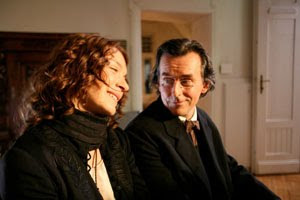
Barbara Romaner and  Johannes Silberschneider star in Mahler on the Couch


The new film by father/son directing team Percy and Felix Adlon, Mahler on the Couch depicts a therapy session between the founder of modern psychotherapy and the famous composer. From the moniker, you’d think Freud’s psychoanalysis of Mahler makes up the heart of the film. Not so. The composer’s visit to see Freud is a framing device that ties together the story of Mahler’s marital difficulties with his vivacious young wife Alma. Still, the actor (Karl Markovics) who plays Siggie lends panache and a sense of humor to his limited screen time. Alma suffers a breakdown and recovers in a sanatorium while having an affair with architect Walter Groupius (Friedrich Mucke). This affair leads Mahler to consult Freud.

Johannes Silberschneider plays Mahler with a multilayered intensity. Gustav is one-third cloistered genius, one-third hardened businessman and one-third hopeless romantic. The obvious star of the film, however, is first time film actress Barbara Romaner. Her performance as a flirtatious muse builds momentum slowly , but captures the viewer’s imagination. We can see why she inspired Mahler and other creative geniuses like artist Gustav Klimt and novelist Franz Werfel.

The Adlons use the “fourth wall” technique throughout the film. Talking directly to the camera, secondary characters, including Alma’s mother Anna Moll (Eva Mattes) and Mahler’s sister Justine Mahler-Rose (Lena Stolze) dispense humorous tidbits about the couple’s situation. This might seem jarring at first, given the film’s dramatic premise, but it works well and gives context to the relationships without being unwieldy. As the film unravels, we see Alma subjugate her musical career to raise their family and help him with his work.The panoramic shots of Mahler’s estate gives us a sense of both emotional and physical scope. The sprawling estate is both Alma’s home and her prison.

Mahler on the Couch is a vibrant character study. It's more about Alma and Gustav than Gustav and Siggie, but the combination does make for a charming and occasionally silly look into the characters in Vienna society around the turn of the 20th century. Like Percy Adlon's Bagdad Cafe, it takes a potentially bleak premise and turns it upright. Ultimately, though, Mahler on the Couch's blend of comedy, romance and feminist parable may be too fragmented for most viewers. The film premiered at the Los Angeles Film Festival on June 24.

Read more: http://blogcritics.org/video/article/movie-review-mahler-on-the-couch/#ixzz0sqpaKtS5

Saturday, June 19, 2010

Kiss the Cup..The Stanley Cup, That Is


Ho-hum. Another Lakers' championship, another riot. The first thing I thought of a few nights ago when the Lakers beat the Celtics was “So, how many bonfires do you think they’ll be around the Staples Center tonight?” To be fair, the riots weren’t caused by fans, but  by local thugs out to make trouble.


The L.A. “fans” celebration was a far cry from Chicagoans celebrating the Black Hawk’s Stanley Cup victory last week.There was a big parade in the Loop, lotsa bar-hopping for the team and the Stanley Cup-and the Cup is still on “tour” around Chicago. There are pics of drunk yuppies cavorting around it, and rumors of scantily clad girls drinking from, kissing or sitting in the cup. And one can only imagine what beer-soaked male fans have done to it. They'll have to fumigate that thing before it goes to the next winner.


This is the first time I’ve paid attention to the Black Hawks since the early 1970s. The 1971 Black Hawks were the team that shoulda, coulda, woulda  won--Tony Esposito, Keith Magnuson, Phil Russell, Pit Martin, Stan Mikita (he doesn’t really own a doughnut shop), and Dennis Hull. I remember when my Aunt Theresa got me an autographed picture of Keith Magnuson. He worked for 7 Up Bottling in the off-season, and my Aunt knew someone who worked for them.(Yes, back then athletes had to take a side job to make ends meet when not working their “day” job, and I don’t mean as pitchmen for  sneakers). I was thrilled to get the 8 by 10 glossy and it held a coveted place above my dresser.

Keith was famous for his pugilistic pursuits on ice. I looked forward to watching game highlights on the local morning kids' show, Ray Rayner and Friends. Ray would show hockey fight highlights, with the dainty Danube Waltz as the soundtrack. You try doing that on a kids' show today, you’d get booted off the air by tsk-tsking child psychologists for glorifying violence. To a kid in 1970s Chicago, hockey fights were just good clean fun. Imagine my shock when I did a Google search a few months ago and discovered that Keith had died in a car crash en route from another player’s funeral in 2003.


Living in Los Angeles severely  limits one’s interaction with reality, so in between trips to New York and Chicago  for an in-person wake up call, I listen to NYC and Chicago radio stations and read the Chicago Tribune and New York Post newspaper websites. Since September, I’ve listened to Steve Dahl’s podcast.  Steve was Chicago’s original shock jock and the vinyl bashing DJ behind Disco Demolition night at White Sox Park in 1979. (In a way, he has atoned for this event. He's now a White Sox season ticket holder).Unceremoniously dumped by his terrestrial radio station last year, Dahl now hosts an hilarious daily podcast. After listening to Steve and his staff talk about the Black Hawks team and the players’ exploits on and off the ice, I started listening to Hawks games on the WGN radio website. When the team made the Stanley Cup finals, I could finally watch them on TV.  Then when they won the Cup, I was relegated to texting, Facebooking and emailing my joy to friends and family in Chicago. There was no one to share it with in L.A. At least I got to hoist a shot glass of Grand Marnier to the occasion since there was no beer in the apartment. Just remind me when I get to Chitown to have a PBR and some Home Run Inn pizza for a belated celebration.